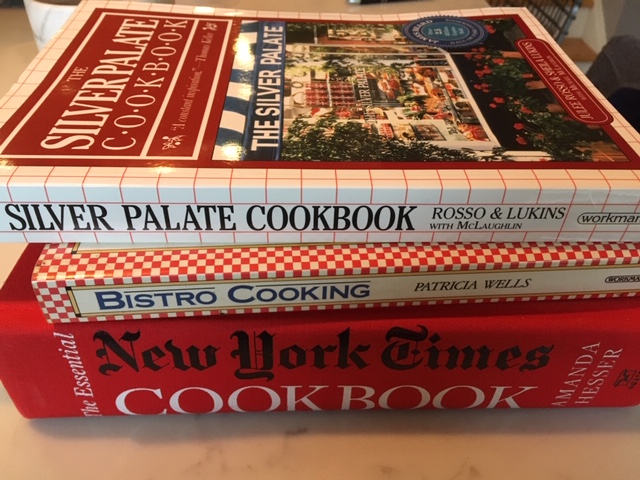
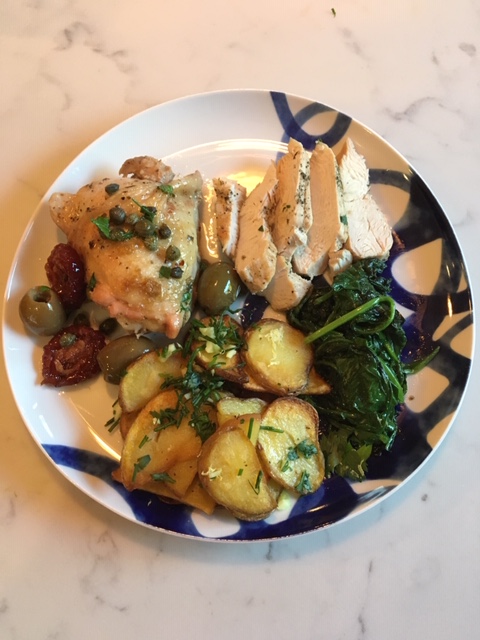
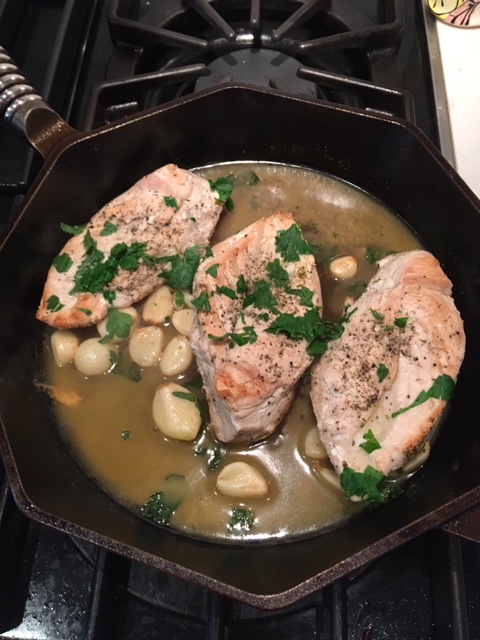
A well-cooked chicken dish represents a great accomplishment for almost any cook. My experience cooking chicken is that it’s a lot tougher (pun intended) than it looks. This week I made two classic chicken dishes, both from cookbooks published in the 1980s and both exemplifying that era’s embrace of a more casual, Mediterranean approach to gourmet cooking. They are the iconic Chicken Marbella from “The Silver Palate Cookbook,” authored by Julee Rosso and Sheila Lukins, and a lesser-known personal favorite, Mistral’s Chicken from “Bistro Cooking” by Patricia Wells. Both cookbooks were published by the Workman house known for its popular recipe guides.
I was not a “foodie” in the 1980s, at least not in the way we understand that term today, but I had already recognized that food meant something to me that it did not to my family. Savoring Biloxi-style seafood gumbo at the Log House, or discovering Italian food at Angelo’s in Gulfport were seminal experiences that transported me into a world apart from the food-as-sustenance worldview of most of my loved ones.
My early relationship with food, in the pre-teen years, revolved around using food as a source of comfort in the face of family strife and the unpredictable volatility of my dad’s moods. As a result, I gained weight in elementary and early middle school, and was subject to resulting ridicule, completing the vicious circle of emotional pain. During my late middle school and high school years, I largely suppressed these urges, subjugating them to the more compelling need to look and act normal and fit in with others. Ultimately, drinking became an alternative antidote to my inner turmoil. That worked for a long time until, as they say, it didn’t work. That’s another story.
As the years progressed, even as I submerged my interests in food, other experiences solidified my conviction that well-prepared food and taking a serious approach to cooking were meaningful and reflective of something larger than either pleasure or meeting basic needs. These experiences included eating at famous New Orleans restaurants like Commander’s Palace (thanks to my now-wife Abby’s family), enjoying those Thanksgiving brunches at Tujague’s I wrote about last week and even pooling cash with friends to check out trendy but casual places like the Louisiana Pizza Kitchen (which I now realize was a local take on Wolfgang Puck’s emerging casual gourmet empire out West).
By the time the 90s rolled around I had begun acquiring the beginnings of my cookbook library, mostly with my employee discount at B. Dalton’s Books on Canal Street. Books have long been my escape portal, and cookbooks offered me entry to a world of sophistication, taste, technique, and style, all areas of fascination since my childhood days of perusing my grandmother’s New Yorker magazines.
When Abby and I combined our households in 1995, we each had our fair share of cookbooks, including the descendants of “The Silver Palate Cookbook” — Julee Rosso’s “Great Good Food” and Sheila Lukin’s “Around the World Cookbook.” We were just beginning our journey of food obsession, and fortunately our combined salaries gave us an opportunity to buy quality ingredients and cookware. For our wedding, we excitedly registered at the newly opened Williams Sonoma store in the Canal Place mall, and as we began to earn more we also explored finer dining around town, taking mental notes of our meals and trying to replicate those professional efforts in our apartment kitchen.
We learned to make pesto and gnocchi and braised lamb shanks and polenta and risotto and skirt steak and chimichurri and garlic mashed potatoes, all hangover influences from the 80s food revolution of fresh, gourmet fare set in motion by cooks and authors like Rossso, Lukins and Wells. Abby and I met Patricia Wells at the Hollywood Farmers’ Market in Los Angeles, where we moved in 1998, and she gave us one of the great food tips of our lives, a restaurant recommendation for our 1999 trip to Provence – more about that later when I get around to writing about my greatest restaurant meals.

Making Chicken Marbella and Mistral’s Chicken provided another time traveling opportunity for me, back to those early days of learning the finer things of cooking and eating and devouring cookbooks and luxuriating on the weekend in watching the early shows on the Food Network (not the vapid reality TV the network now features).

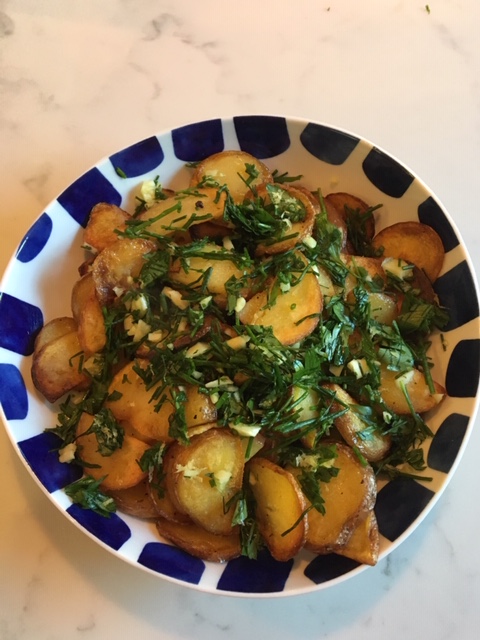
Both recipes are pretty straightforward so I will spare folks the details, other than to note that I used bone-in thighs for the Chicken Marbella and boneless breast (for expediency and based on what was available at my local market) for Mistral’s Chicken. The recipe for Chicken Marbella is available here, and the recipe for Mistral’s Chicken is available here. “New Times Cookbook” author Amanda Hesser jokes that after “The Silver Palate Cookbook” was published every cook in America served Chicken Marbella at dinner parties until everyone was sick of it. While less well known, Mistral’s Chicken has been a mainstay for us since we met Patricia Wells because it’s both delicious and foolproof. We served our chicken with a side of sliced potatoes cooked in walnut oil and topped with gremolata, another recipe from “Bistro Cooking,” which was so good I wanted to make it again the next day.
I am so grateful I discovered cooking in my 20s as a way of transforming one of our basic needs into a creative act. Cooking remains to this day a great solace to me in this mad, crazy world.
This week’s $25 donation went to the Emeril Lagasse Foundation. Thank you for spending a little time with me.
 The Nervous Southerner